In recent years, the domestic sci-fi industry has flourished, and industries such as reading, games, film and television have become more and more abundant. Science fiction has gradually become an indispensable guiding force in scientific and technological innovation and social civilization progress. On July 18th, the sci-fi ramble program "Don’t Answer" jointly produced by Youku and Three-body Universe was launched. The program is based on science fiction, observes reality, and challenges future imagination with science and technology and humanity.
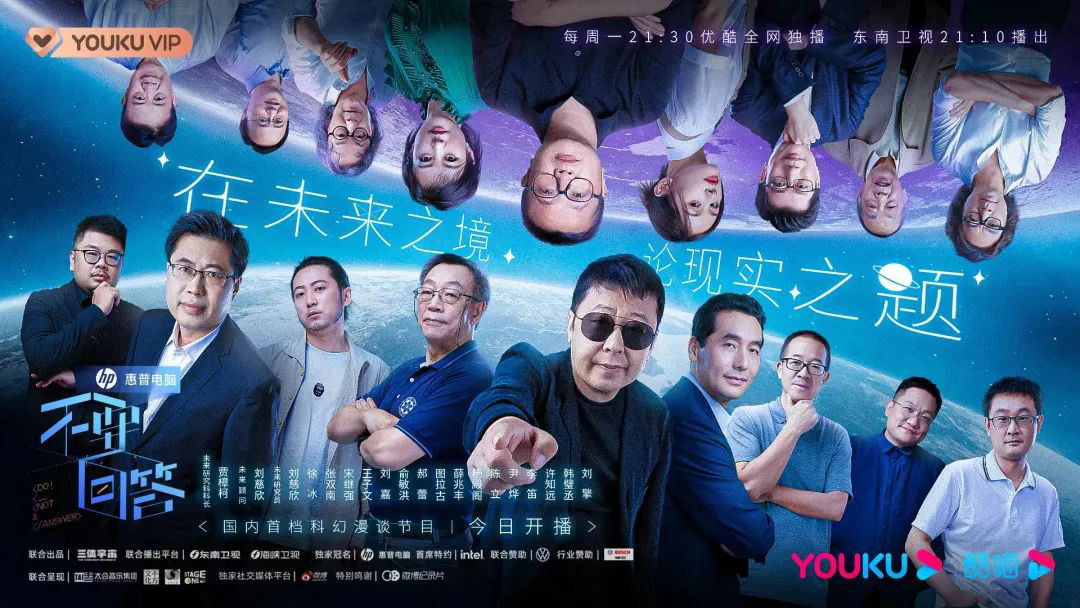
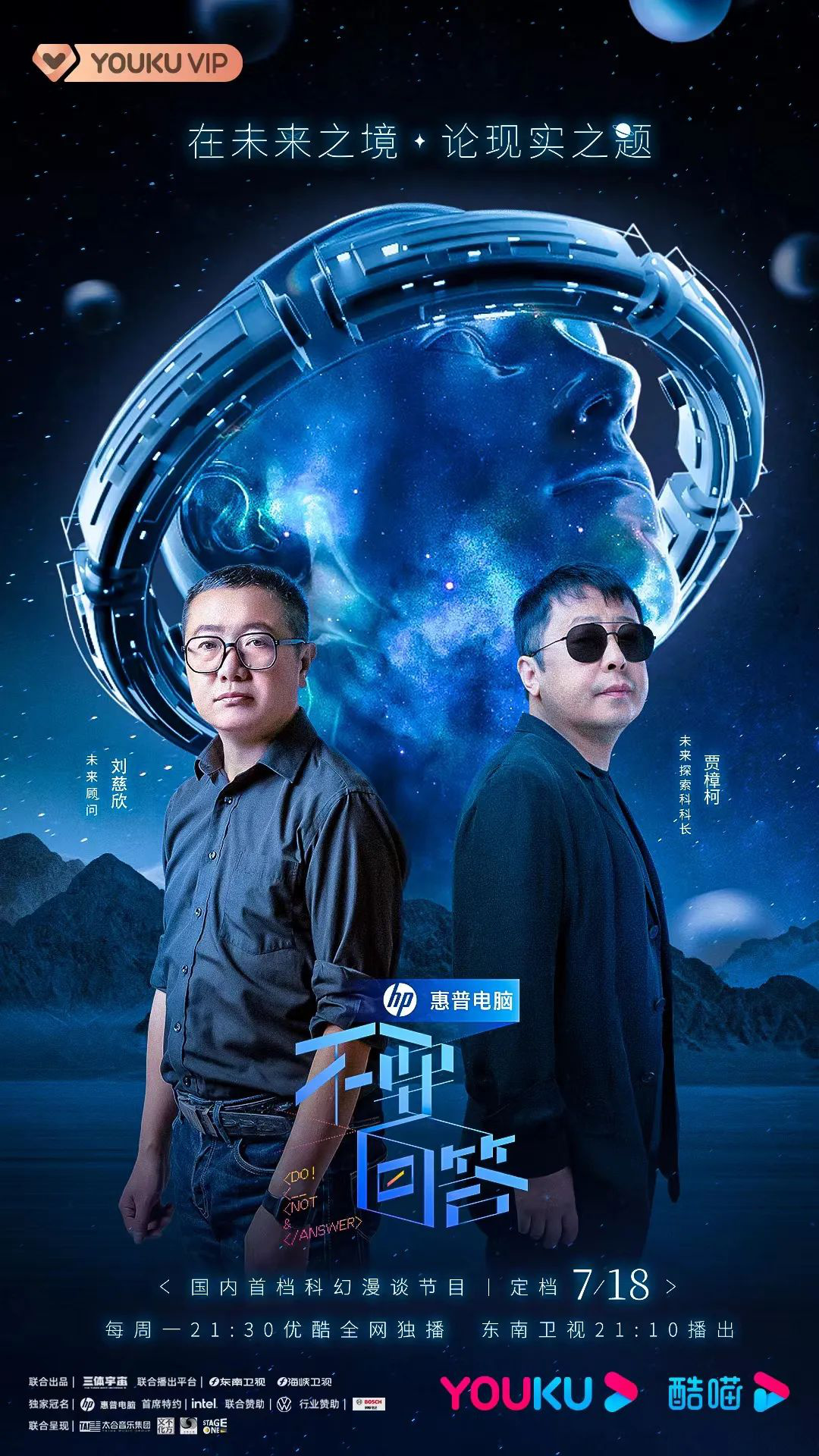
"In the future, on the topic of reality." "Don’t Answer" takes the three-body cosmology as the origin, and Jia Zhangke, as the "chief of the future exploration department", and Liu Cixin, a "future consultant", and scientists in various fields as "future researchers" jointly develop ideas and interpretations of the future. The program consists of eight issues, involving Mars immigration, marriage and love under big data, digital cloning, virtual actors and many other topics that can trigger empathy.
"Don’t Answer" is Youku’s first exploration of science and technology humanities programs, and it is also another innovation in content expression after high-quality talk shows such as "Round Table School" and "Walking the World". With Youku culture entering the tenth year, how to better observe the relationship between people and society drives Youku to make new attempts. "We need to express people’s observation and thinking more openly, so" Don’t answer "came into being." Wang Xiaonan, director of Youku Culture Channel, said.
Taking the future as the shell,
Passing the spiritual core with temperature
The title of "Don’t Answer" comes from a famous segment in Liu Cixin’s science fiction novel "Three-body"-the high-level civilized three-body listener No.1379 chose to violate the three-body law, conceal the earth signal, and send "Don’t answer!" Warning, trying to help the earth escape the fate of being strangled by three-body civilization. This program uses "Don’t answer" to remind everyone not to jump to conclusions in the face of new things, but to observe more and form their own independent thinking.
Don’t Answer is based on the background of three-body universe. Yang Zhou, producer of Youku Culture Channel, said that Youku has established contact with the three-body universe for a long time, and has been thinking about how to create a new form of scriptless program with the work of Three-body as inspiration. "The sci-fi thinking presented in the book, or the value of thinking about the future of mankind, is an extremely valuable spiritual core, showing the brilliance and sparks in human nature, which is also the origin of our creation of this program." Yang Zhou said.
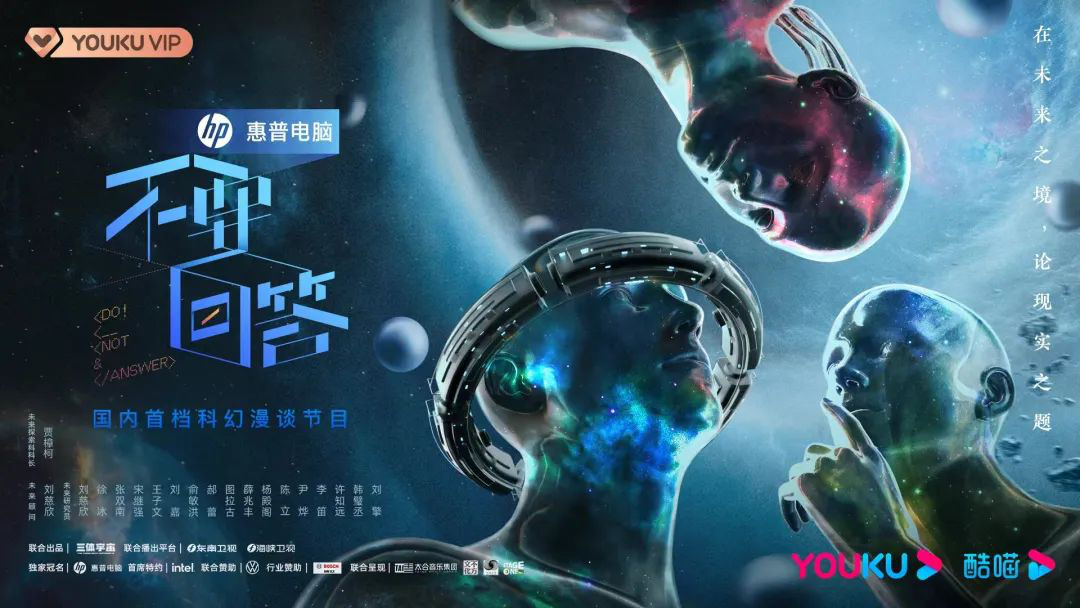
In recent years, the sci-fi market has shown obvious changes. From the previous pursuit of big special effects and visual shock, it began to pay more attention to the expression of human nature in sci-fi works. "Don’t Answer" takes talking about the future universe as the shell, but in fact it takes observing reality as the core, focusing its vision on practical topics that are closely related to everyone. While imagining the future and discussing the present, the program guests will also inspire the audience to reflect on reality and think more. Ding Qi, the general director of Don’t Answer, said, "We have a consensus that this program should have temperature, reflect warm colors and convey the message of science and technology to the audience."
"The program explains the changes brought by science and technology to human life from a more humanistic perspective, and shows the temperature side under the setting of science fiction, making the program more full of humanistic care." As Yang Zhou said, if the brain-computer intervention technology described in the science fiction world can really benefit autistic children, it will be very warm and full of hope.
Random talk classProgram iterationUpgrade,
Combination of science and technology and humanities
For a long time, Youku Humanities has been focusing on human observation and expression, deeply cultivating high-quality content, and has rich creative experience in this field, and has gradually established its own unique label. High-quality talk shows, such as Round Table School, Walking in the World, and Everyday Literature, have gone through many seasons and gained a group of loyal audiences. "Don’t Answer" is a talk show produced by Youku Humanities. While maintaining high quality as always, it has also made a series of innovative explorations in content expression.
In terms of program setting, each program begins with a separate sci-fi short film to lead to the topic. For example, the first episode tells the story of three generations discussing whether to go back to Earth for a family trip in the year of 2330 and the year of 23 on Mars, which leads to the topic of how "interstellar refugees" in the scattered universe understand their "hometown". Through the opening of the short film, the whole film is constructed, and the situation is established. While the guests output their own views and reflect their values, they also continue to write the ending of the short film with the audience according to their own ideas. "We hope that through this form, the guests will enjoy this conversation first, and at the same time, the audience can easily understand, understand and love this program." Yang Zhou said.
In the scene layout, Don’t Answer sets up the talk field of the concept spaceship "Blue Space", which also refers to the spaceship drifting for decades in the space mausoleum chapter of Three-body. The robot WACKER (based on Asimov’s novel) was added as the assistant of "Jia Kechang". The interactive relationship between WACKER and the protagonist also showed the relationship between man and artificial intelligence under the setting of science fiction.
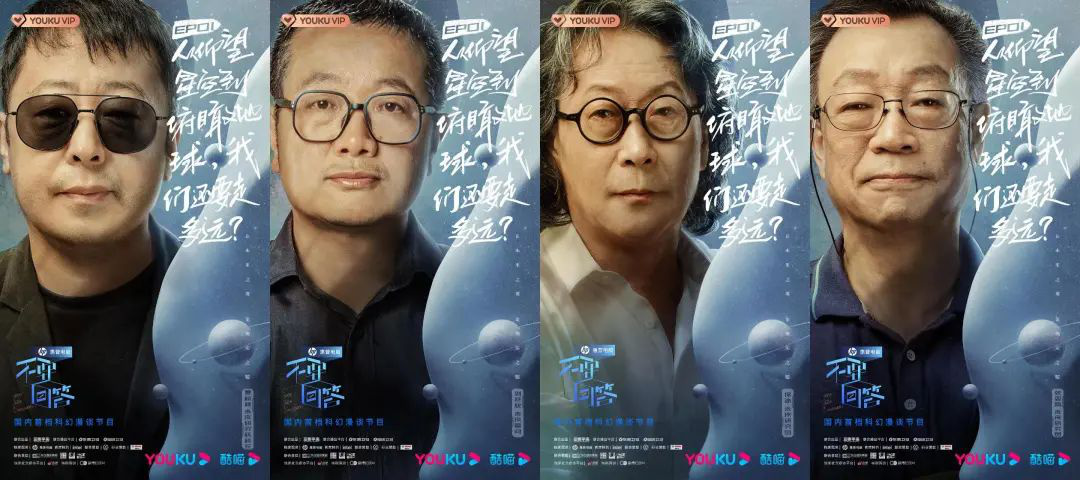
In the topic setting, the program embodies the combination of technology and humanities-even if it is a science fiction topic, it should be closer to the general public. The program invited Jia Zhangke to join us. In addition to paying attention to his keen sense of social observation, he also hoped to highlight the sharp contrast between him and science fiction. As a well-known realistic film director, Jia Zhangke used to pay more attention to people and things in the past. Facing science fiction topics, his concerns will arouse the audience’s interest. At the same time, in terms of guest matching, each program is discussed by a top humanities scholar and a frontier expert in science and technology.
Vertical program"breaking the wall",
Lower the viewing threshold
If you meet someone who makes you very excited, but the matching score of "big data blind date" is very low, will you still bravely pursue love? If sleep time can be traded, would you choose to buy sleep time or sell it? These topics are full of sci-fi colors, but also make people fall into meditation on reality. These topics that can make every ordinary person participate in the discussion will be launched one by one in the program "Don’t Answer".

Compared with other programs, rambling programs and sci-fi themes have always had limited audiences. "Don’t Answer" takes a different approach, arousing the participation of ordinary audience by finding the resonance point of emotions. "Minimizing the viewing threshold and making more people interested is the direction we have been working hard." Ding Qi said.
The conversation angle and way of Don’t Answer are all from the perspective of lowering the threshold. "At the beginning, we planned to adopt a more vertical form, which is more in line with the appetite of fans of" Three-body "and science fiction fans, but in the end we made adjustments because we hope that this program can reach more people." Yang Zhou said.
As Yang Zhou said, the direction and setting of the program will be different for different audiences. For example, if the first issue of the topic of Mars immigration is to attract the sci-fi "Little White" audience, we must start with why humans want to go to Mars. At the same time, the content of the guests’ conversation is not limited to the ideological or logical level, but to share more personal feelings under the setting of science fiction, so that more viewers can digest and understand.
In this process, it is very important to balance the levels of science and technology, humanities and so on, which is also a difficult problem in the creation of Don’t Answer. Ding Qi said that what we are discussing is not only science fiction, but also a topic closer to everyone. "Don’t Answer" tries to avoid giving ordinary audiences a sense of distance and more embodies the combination of science and technology and humanities. "I hope this sci-fi gossip program can be like a small fire to ignite more people’s enthusiasm for science fiction."
Please send the submission to the email address:
zongyiweekly@163.com


Please see the micro store for purchase.

关于作者